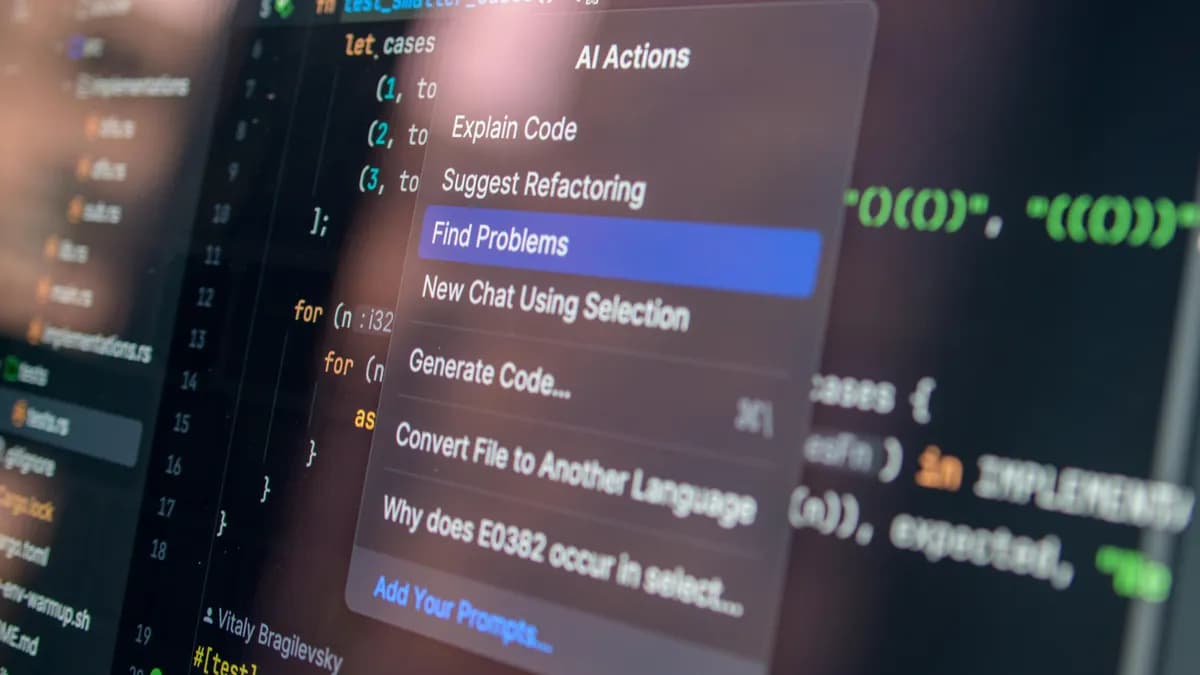

The value of automation workspace appears when the team can explain the decision before discussing implementation. The practical scope is to make triggers, inputs, permissions, retries, outputs, owners, and stop controls visible. The central risk is that hidden automation can repeat destructive work long after its original context disappears.
Classify the failure before choosing a fix: Automation Workspace
An automation workspace failure can be a rejection, delay, partial completion, duplicate action, stale read, or manual correction. Those states are not interchangeable. First inspect the source-traced dataset and reproducible calculation to determine whether the original request crossed an irreversible boundary. A generic error message is not enough evidence for retry.
Follow the operation through interruption: Automation Workspace
Use this production-shaped case: an input is missing, duplicated, late, or inconsistent with a previous run. Capture the operation identifier, starting state, attempted transition, external response, and user-visible result. Then repeat the request. If the second attempt can create another side effect, recovery needs idempotency or reconciliation rather than a more prominent retry button.
Recover in the smallest safe order: Automation Workspace
Start with the least invasive action that restores a trustworthy state. Prefer resume, replay, reconcile, or compensate before broad administrator edits. Preserve the failed record until the cause and customer impact are understood. The decisive rehearsal is whether the team can disable a dependency, observe the failure, and recover without editing production data by hand.
Observe the outcome users experienced: Automation Workspace
Infrastructure health can remain green while hidden automation can repeat destructive work long after its original context disappears. Connect the user-visible outcome to the release, dependency, and state transition that influenced it. Track reproducibility and false-positive review rate; an alert without an owner and safe action is only noise.
Decision map: Automation Workspace
- Inputs. Name the owner, authoritative record, expected state, and denial behavior for this part of automation workspace.
- Permissions. Document the normal transition, one interrupted transition, and the smallest safe recovery.
- Retries. Attach a reproducible test, dated result, and reviewer who accepts the remaining risk.
- Outputs. State the input, output, permission boundary, and removal condition before adding automation.
- Owners. Record how repeated action behaves and which evidence distinguishes retry from duplication.
Boundary cases: Automation Workspace
- When the recorded value for inputs changes after permissions is stored, name which value wins and how the losing state is reconciled.
- If evidence for retries becomes unavailable while the automation workspace request is in progress, preserve enough context to distinguish rejection from partial completion.
- A repeated action involving outputs should return the existing result or expose the possible duplicate effect before retry.
- A denied change to owners must leave authoritative state untouched and create an audit record that reveals no secret.
- Recovery should restore the smallest trustworthy state first, then verify the visible automation workspace outcome against the maintained record.
Measure the decision, not activity: Automation Workspace
Track reproducibility and source coverage. Before collecting results for automation workspace, define each measure's population, environment, time window, and owner. Activity is useful only when it clarifies whether the protected automation workspace outcome became safer or easier to recover.
Set the investigation threshold for automation workspace in advance. The failure and recovery review should also name the permitted response, the evidence required to close the issue, and the next review date. Stop collecting automation workspace data when it no longer distinguishes success, denial, delay, duplication, or recovery, or when it no longer changes a decision.
Sources and local proof: Automation Workspace
These primary references document platform behavior relevant to automation workspace. For automation workspace, those references establish terminology and constraints; they do not verify the local implementation.
- Using Dead-Letter Queues in Amazon SQS
- Amazon SQS Visibility Timeout
- Queue-Based Load Leveling Pattern
- Observability Primer
- Authorization Cheat Sheet
Any publishable automation workspace claim still needs dated local evidence: configuration, test output, screenshots, logs, queries, or recovery results from the named product. The failure and recovery review should say exactly which artifact supports each important claim.
A related InMyDraft example: Automation Workspace
InMySignal provides a local example of an inspectable product boundary relevant to automation workspace. Its project catalog records this implementation detail: Each company record carries its extracted public contacts (email, phone, WhatsApp, social profiles) with confidence and verification status, plus an interactive relationship graph where every edge is engine-generated and traced to source evidence.
The comparison between InMySignal and automation workspace is deliberately narrow. It shows how one product makes state and evidence visible; it does not prove that every automation workspace recommendation has been implemented. Use the InMySignal example to review automation workspace, not as a substitute for testing the product in scope.
Review checklist: Automation Workspace
- Identify whether the failed automation workspace request was rejected, accepted, delayed, or partially completed.
- Preserve the last trustworthy state before attempting repair.
- Test duplicate delivery and an unavailable dependency.
- Use source identifiers, timestamps, query output, calculation breakdowns, and rerun comparisons to choose the smallest safe recovery.
- Turn the observed failure into a regression test or maintained runbook case.
An automation workspace decision is ready for the next stage when another accountable person can reproduce the evidence, explain the failure boundary, and perform the recovery without relying on the original author's memory.