
InMyCitizen
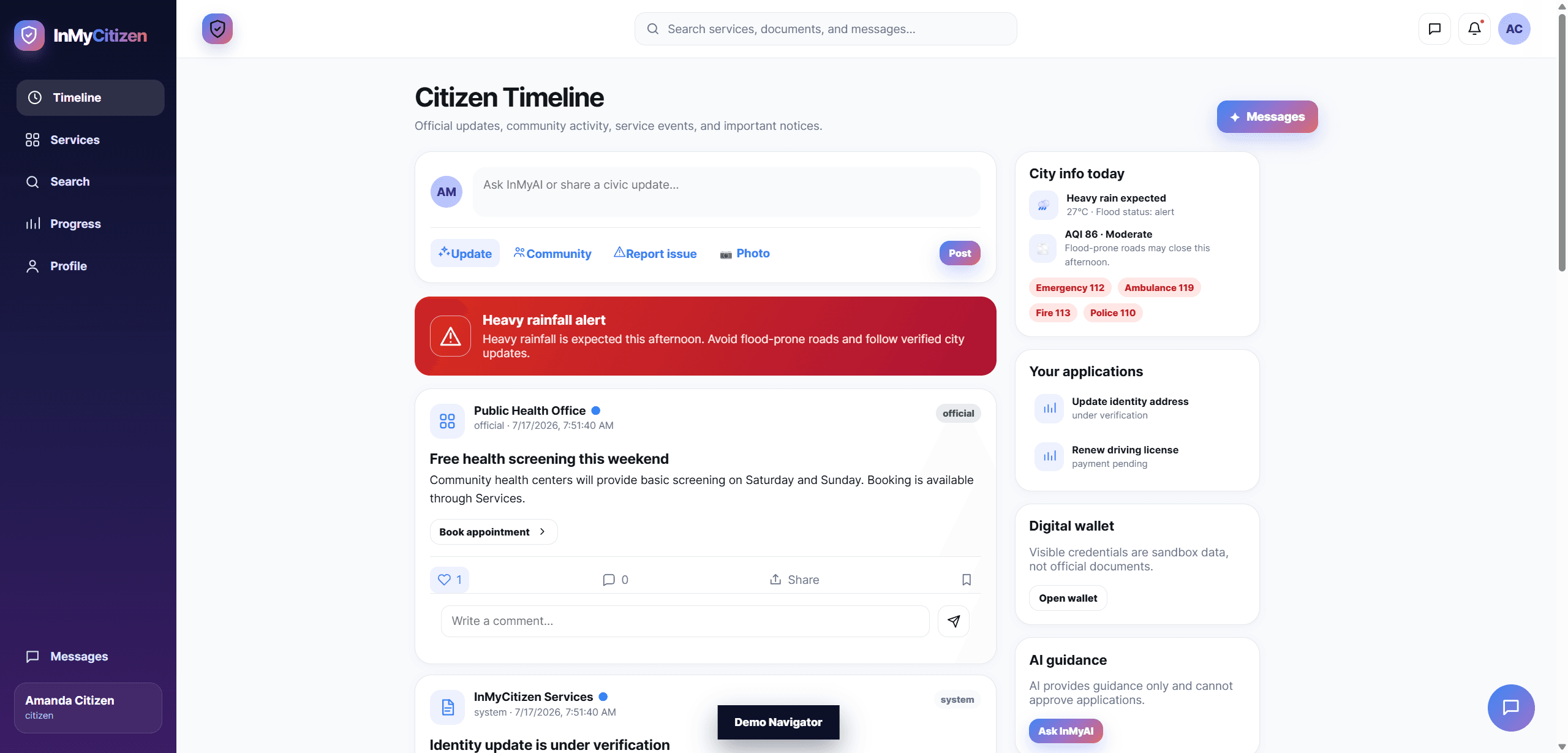
A citizen-services superapp — a modular service catalog, application workflow, document wallet, civic timeline, direct messaging, and an agency-side no-code Service Builder.
How it works
InMyCitizen is a working citizen-services superapp: residents discover services from a modular catalog, apply through a generic workflow engine, pay (sandbox or real), track progress, manage a document wallet, file civic reports, and chat with agencies — while agency staff manage cases and extend the catalog without code.
- Each service is a self-describing manifest — its capabilities (form, upload, payment, appointment, tracking, document issuance), its fee, its form fields, and its workflow stages — so adding a new service is a configuration step, not a code change.
- Residents apply, pay if required, and watch their case move through workflow stages with a per-application reference, percentage, and full history.
- A civic timeline, direct messaging (citizen, support, community, and AI conversations), a document wallet, civic reports with photo and location, bills, and appointments are all wired into the same resident account.
- Agency staff manage a case queue and advance eligible cases through stages, and agency admins use a no-code Service Builder to publish new services that appear immediately in the resident catalog and search.
Purpose
Most government-service portals are organised by agency, which means one life event can mean visits to several disconnected counters. InMyCitizen organises around the resident's task: a single catalog where services describe their own form, payment, appointment, and document steps, and a generic workflow engine pushes an application from submission through verification and approval to document issuance.
Highlights
Who it's for
This project is shaped around public services — reorganising how residents interact with government around the task, not the agency.